
On Sunday, August 4, I preached on one of my least favorite scriptures. To be clear, there are many scriptures that I don’t “like.” I don’t like it when Jesus says I should love my enemy and pray for those who persecute me (Matthew 5:44). I don’t like it when Jesus says to forgive not seven times but seventy times seven (Matthew 18:21-22). These are only a few of the Bible passages that I dislike and make me uncomfortable.
In 2 Samuel 6, David has united the tribes of Israel, conquered Jerusalem, and built his palace. Only one thing remains: to move the Ark of the Covenant to Jerusalem. 1 Samuel 5 records that the ark was lost to the enemy Philistines but wherever it went plague and trouble followed. So the Philistines sent it back to the Israelites in 1 Samuel 6 on a new cart pulled by oxen. After some of the inhabitants of Beth Shemesh died after looking inside the ark (6:19-20), the ark ended up in Kiriath Jiriam. Apparently, it stayed there until David decides to move it to Jerusalem.
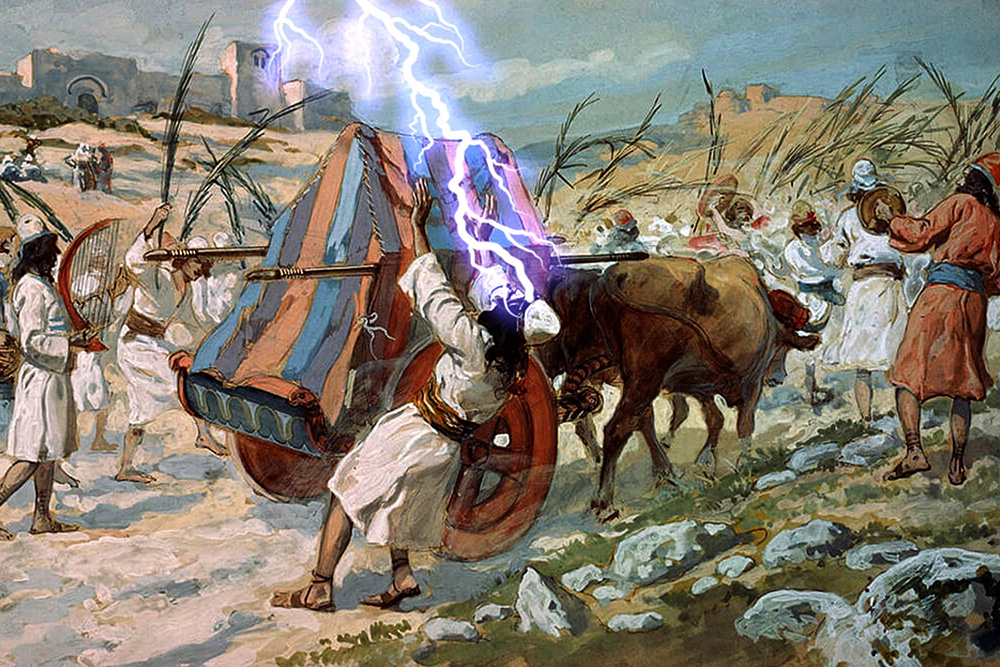
Like when it was received from the Philistines, the ark was placed on a new cart pulled by oxen, accompanied by Uzzah and Ahio, sons of Abinadab. All goes fine until the threshing floor of Nakon when the oxen stumble, Uzzah reaches out to steady the ark, and is instantly killed. Not fair, I want to say. He was just trying to help, I tell God. We may not like it, but maybe we can learn from it.
One of the things that we can learn is that obedience matters. In Exodus 25:14-15 and Deuteronomy 10:8 we see that the ark was equipped with poles to be carried on the shoulders of the Levites. Numbers 7:9 adds that this group of Levites, the sons of Kohath, would not use carts “because theirs was the service of the holy things, which they carried on their shoulders.” And, while carrying the holy things, God clearly warned the Levites that “they shall not touch any holy thing, lest they die” (Numbers 4:15, emphasis added). Both David and Uzzah forgot or disregarded these instructions. When we ignore, forget, disregard, or are ignorant of God’s instruction, we do so at our own peril.
We can also learn that good intentions are not enough. 2 Samuel 6 tells us that the oxen stumble and Uzzah touches the ark to steady it. Uzzah’s intentions were good when he reached out to touch the ark, he was trying to help the ark, and not harm it. But maybe he was enthralled with the dancing, singing, music, and the joy of moving the ark, or maybe he was ignorant of the danger, but, for whatever reason, he touched the ark and suffered the consequences. Good intentions are not enough.
We should also learn that things of God are serious business- they are holy. The word holy means “set apart”. The things and worship of God are “set apart” to specifically focus our minds on God. We need to ask God’s forgiveness (not the preacher’s forgiveness) when we come to worship and our minds are on the week that was or on the week that is coming. Or when we are distracted when we read the Bible or pray. We need to ask God’s forgiveness when we are thinking about what is for lunch, or the Olympics, or writing notes to our friends, or taking a nap instead of the things of God. God gives us 7 days, 24 hours per day, 168 hours in a week to do all that. Can we not give God some of those hours? The things of God, our relationship with God, is, and should be, serious business.
Honestly, 2 Samuel 6 and the story of Uzzah is one of my least favorite scriptures. But even this least favorite scripture has truths to teach us if we pay attention.
 revkevreflections