Telling the Story

Sign welcoming us to Totem Bight State Park

Sign welcoming us to Totem Bight State Park

One of our stops in Alaska was Ketchikan, where we visited the Totem Bight State Park.  At Totem Bight, we had the opportunity to view many replica native totem poles on a rare non-rainy day in Ketchikan.  It was interesting to discover how the totem poles were made (we saw one being carved by a native carver atop Mt. Roberts in Juneau), the kind of wood that was used, and that they would usually last about 100 years, even in that rainy climate.  But the most interesting thing I discovered was that many of the totem poles told a story about the beliefs of the native people.

Thunderbird totem at Totem Bight State Park in Ketchikan

Thunderbird totem at Totem Bight State Park in Ketchikan

Take this totem pole for instance.  “The intent of the carving is to illustrate the mythological conception of thunder. Thunder is created by the beating of the bird’s wings, and lightning by the blink of its eyes. This huge bird lives high on the mountaintop. The whale at the base of the pole symbolizes the mountaintop where the bird rests before devouring his prey. It is said that whale bones may be found on many mountain tops that have been carried there from ages past.”  (source Totem Poles at Totem Bight State Historical Park)  This totem pole describes the native people’s explanation of thunder.  To a people without a written language, this totem pole would be an immediate and constant reminder of how they perceived the world around them.  (By the way, you can find descriptions of all 14 totem poles at Totem Bight State Park in the above website.) 

The sad thing is that some of the stories and totems have been lost over time.  Our guide told us that when missionaries first arrived in Alaska and begin to work among the native people, the missionaries made the native people tear down the totem poles, thinking that they were graven idols.  They didn’t realize that the poles were simply telling the stories of the people.  Many poles and many stories were lost because of misunderstanding.

Viewing the totem poles and the stories that they told, I started thinking about story telling and how we tell our stories of culture, family, and faith.  It was not too many years ago that people would gather around a camp fire or on a porch and tell stories.  Today, much of that culture is gone.  Today, we go inside our own homes, turn on the television and allow the TV to tell us the story.  Or we sit at our computer and write our story on facebook or on a blog (like this one) or maybe “tweet” out a story (as long as it is 240 characters or less.)  It seems that it is becoming more and more rare to sit down together and talk face to face in our modern culture.

Telling the stories of our family is important, too.  In 2010, NBC produced a TV show called “Who Do You Think You Are?” that traced the family history of celebrities, with some very emotional results.  NBC cancelled the show in 2012, but it has been picked up by TLC.  http://en.wikipedia.org/wiki/Who_Do_You_Think_You_Are%3F_(U.S._TV_series)  This show reminds us that it is important to know the history of your family.  In my family, we would gather at
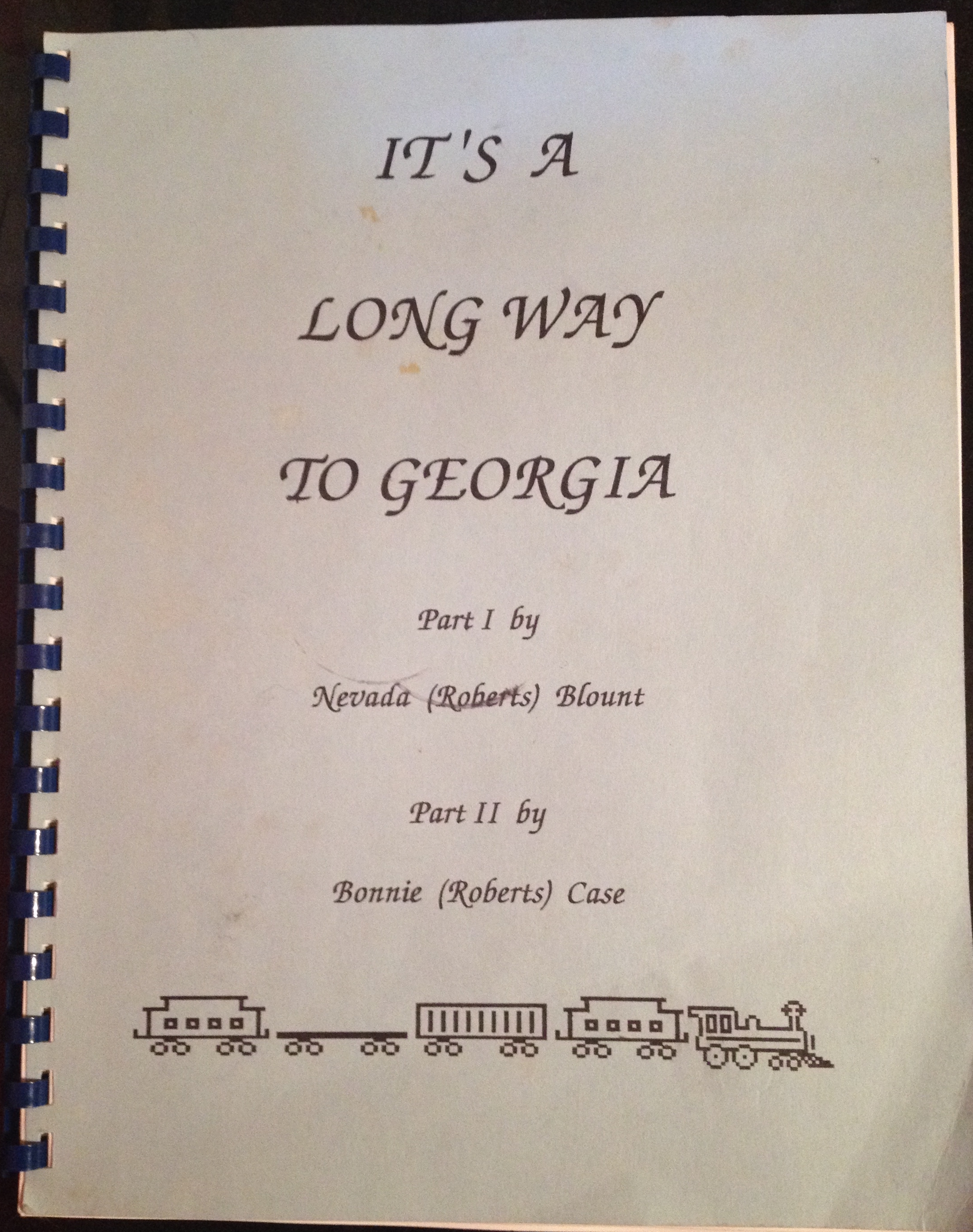
Cover of my Grandmother and her sister's memoirs of their move from Georgia to Louisiana

Cover of my Grandmother and her sister’s memoirs of their move from Georgia to Louisiana

the cemetery the Saturday before Easter and grandmother would take us to all the headstones of our deceased family members, tell us about them and how we were related to them.  One of my most treasured family items is a memoir written by my grandmother titled “It’s a Long Way to Georgia”, telling of her family’s move from Georgia to Louisiana when she was a little girl. I never met my mother-in-law, Sharon Kaye Rousseau (she passed away about a month before I met Jana), but I feel as if I know her through the stories that Jana and others have told me of her.  I hope and pray that we never forget to tell these family stories to one another and to our children.

Maybe the most important story to tell is one of faith.  As a pastor, I think I have the greatest job in the world to tell the true story of God’s love, grace, mercy and faithfulness each day.  But isn’t telling God’s story and the story of Jesus’ life, death, and resurrection, a job for each and every one of us?  If we don’t tell the story, who will?  It has been said that the church is only one generation away from extinction.  With the decline of many mainline denominations, church attendance, and the cultural influence of the church, that statement may be more true today than it has been since the very beginning of the church.  Maybe the story needs to be told in a new way, but God have mercy on us if we fail to tell the story!  

In the United Methodist Hymnal there is a hymn titled “I Love to Tell the Story”, written  by Katherin Hankey (find the history of this hymn here: http://www.gbod.org/resources/history-of-hymns-i-love-to-tell-the-story).  It is one of my favorite hymns to sing and the chorus says “I love to tell the story, ’twill be my theme in glory, to tell the old, old story of Jesus and his love.”  It is a great hymn, with a great message but sometimes I wonder if we have not told the story of Jesus as well as this hymn challenges us to do.  I hope and pray that you and I will tell the story of family and faith through spoken words, facebook, twitter, even totem poles, but, by whatever means necessary, tell the story!  

Questions to consider:  How do we pass down the stories and histories of previous generations in our modern technological culture?  Who passed down the stories of faith and family to you?  To whom do you need to pass down your story of faith and family?

Feeling Small?

A view of the Portage Glacier with reflection in Portage Lake near Whittier, Alaska.

A view of the Portage Glacier with reflection in Portage Lake near Whittier, Alaska.

I haven’t written for a few weeks because we took a 12 day cruisetour to Alaska aboard the Norwegian Sun. It was a great trip, but I felt small when I was in Alaska.

It’s not often that I feel small. At over 6 feet tall and upwards of 250 pounds, I consider myself a pretty good sized fellow. I was almost always on the back row of the photographs because of my height, and, when I was younger, played goal keeper for our soccer team because I was so long and lanky.

alaska-small

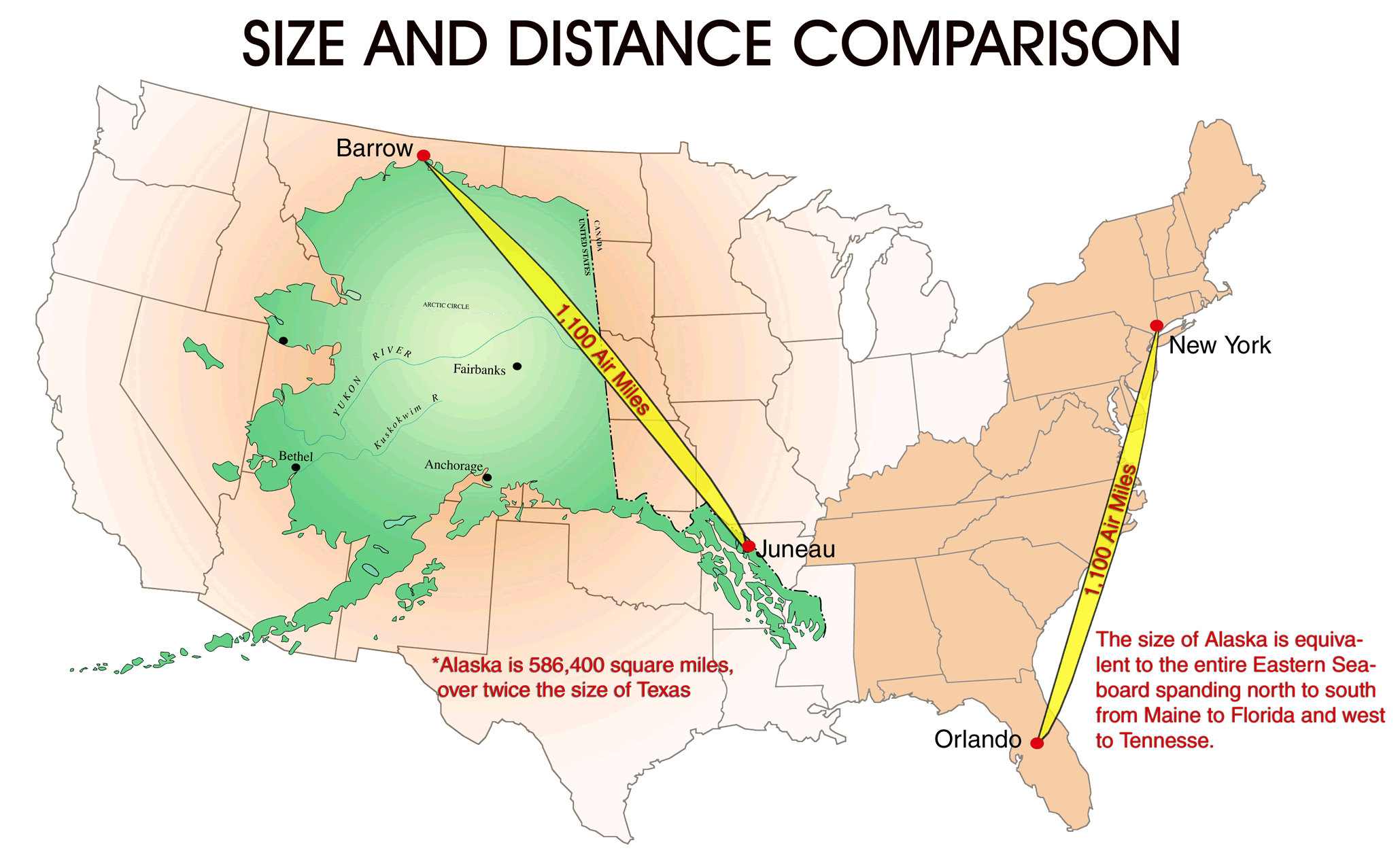
The US Marshals’ Service, District of Alaska, has a great graphic available that provides an Alaska size and distance comparison with the lower states.

Maybe it is the sheer size of Alaska that made me feel small. Alaska is the largest state in the United States in land area at 586,412 square miles, over twice the size of Texas, the next largest state. It is larger than the combined area of the 22 smallest U.S. States. Alaska is even larger than all but 18 sovereign countries. The United States purchased Alaska from Russia on March 30, 1867, for $7.2 million ($121 million adjusted for inflation) at approximately two cents per acre! (source http://en.wikipedia.org/wiki/Alaska)  We spent almost 10 days in Alaska and visited several of its largest cities and one of the largest US National Parks (Denali) and still feel like we only saw a small portion of this gigantic state! Alaska is a big place!

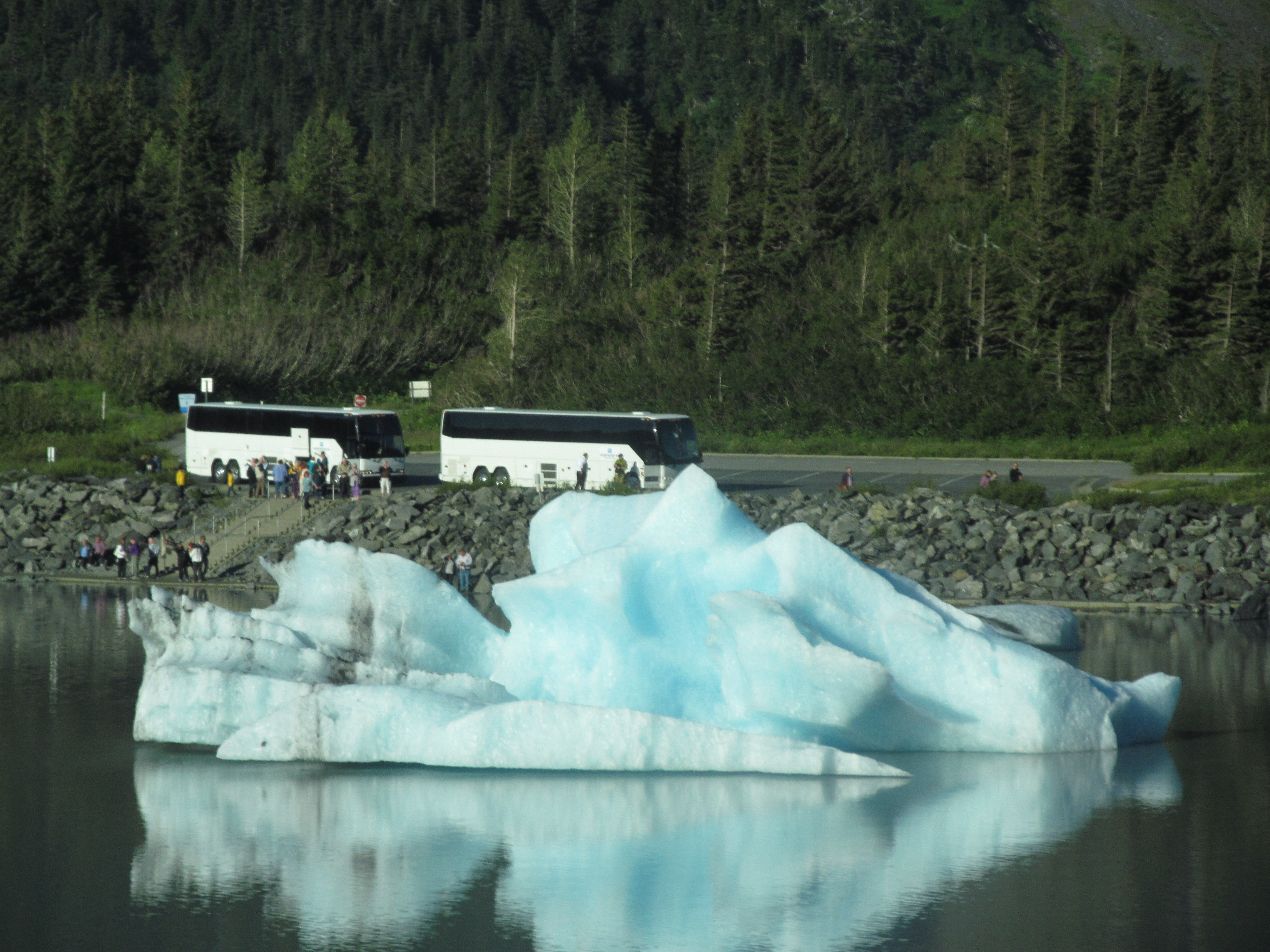
An iceberg in Portage Lake from the Portage Glacier dwarfs tour buses near Whittier, Alaska.

An iceberg in Portage Lake from the Portage Glacier dwarfs tour buses near Whittier, Alaska.

Maybe it is the vistas of Alaska that made me feel small. It was amazing to look out from our hotel on the side of a mountain near Denali National park and to see snow on mountains that were miles and miles away. Mt. McKinley was over 80 miles from our hotel, and yet could be seen on a clear day, though the hotel admitted they could only see Mt. McKinley about 2% of the time. We saw glaciers that were 25 stories tall (Marjorie Glacier in Glacier Bay National Park) and even 40 stories tall (Hubbard Glacier- North America’s largest glacier)! You get an idea of how big the icebergs glaciers like these can produce by noticing how the iceberg dwarfs the tour buses in the picture. We even went so high up in Denali National Park that we went above the timber line on a Tundra Wilderness Tour and could see for miles and miles (though it was bit disconcerting to look over the edge of the road and consider how far off the ground we were)! Alaska has some beautiful and large vistas!

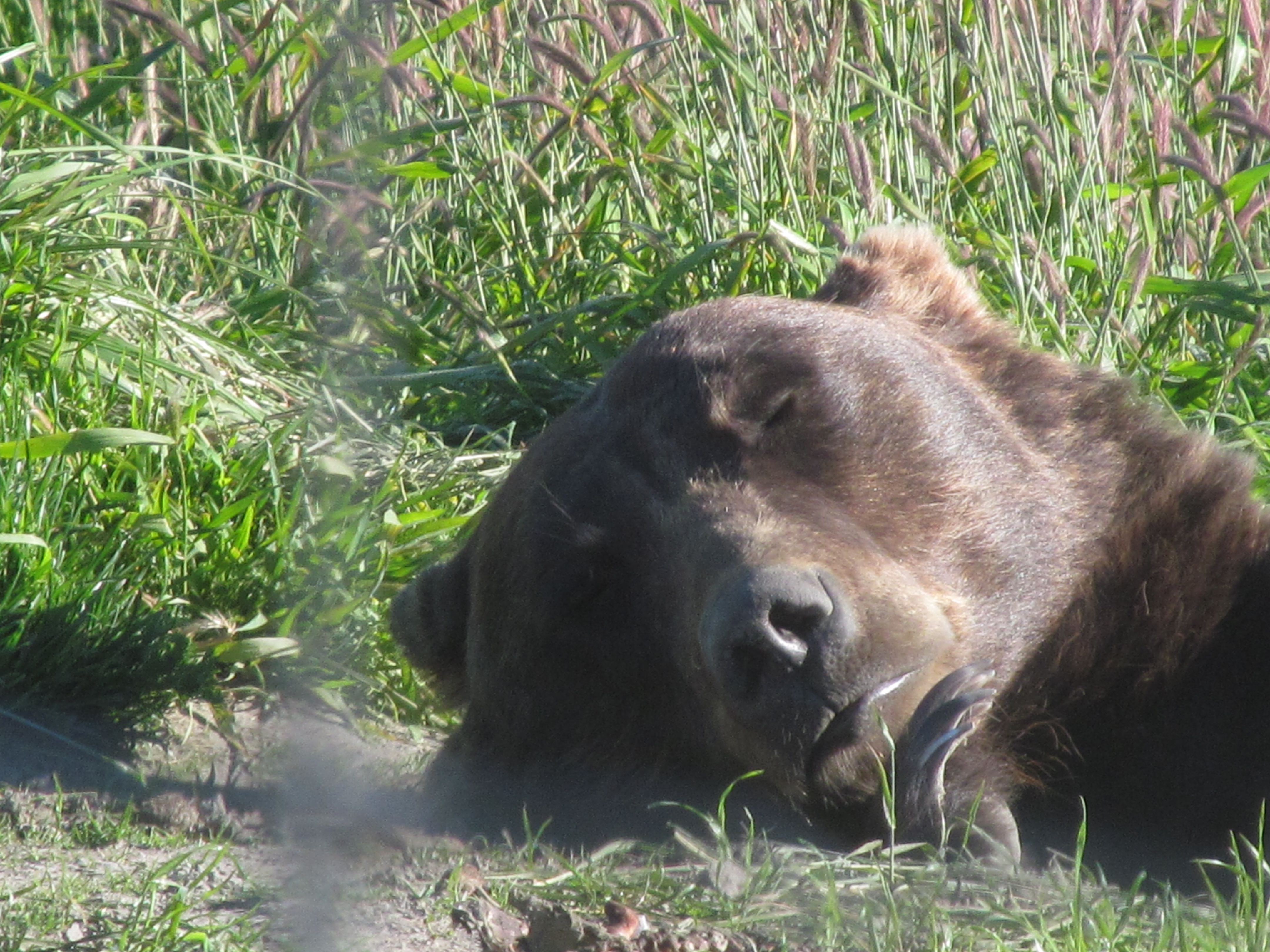
A Grizzly Bear at the Alaska Wildlife Conservation Center naps in the morning sun.    Notice the size of his mouth and claws!

A Grizzly Bear at the Alaska Wildlife Conservation Center naps in the morning sun. Notice the size of his mouth and claws!

Maybe it is the wildlife of the Alaska that made me feel small. We saw Bald Eagles, Humpback Whales, Sea Lions, Seals, Otters, Moose, Grizzly Bears, Elk, Yaks, Wood Bison, Dall Sheep, Caribou, and many other kinds of Alaskan wildlife. Many of them are BIG. At the Alaskan Wildlife Conservation Center, we got up an up close and personal view of a Grizzly Bear. The huge size of his claws and paws were astounding and frightening at the same time. We were fortunate to see Moose, Grizzly Bears, and Caribou in the wild in Denali National Park. While there are some smaller animals, Alaska has many large animals, some of the largest in the world. Alaska has some amazing and large wildlife!

Experiencing the grandeur and size of Alaska made me feel a little small and I thought of these verses from Psalm 8: “When I look at your heavens, the work of your fingers, the moon and the stars that you have established; what are human beings that you are mindful of them, mortals that you care for them? Yet you have made them a little lower than God, and crowned them with glory and honor.” (Pslam 8:3-5 NRSV) It is an amazing thought that such a BIG God, who created so many wonderful and beautiful places like Alaska, Louisiana, and all points in between, could be mindful of us and care for us!

The truth is that we don’t have to go to Alaska to feel small. Maybe you are small in stature and are constantly looking up to others. Remember to look up to God and follow God. Some of the smallest people in stature I have known have been spiritual giants. Maybe you feel small because of an illness or a disease. God is bigger than any ailment that we face. Maybe you feel small because of humanity’s greatest enemy, death. God has defeated even death through the life, death, and resurrection of Christ. And the good news for us is that when we feel small, let us remember that there is a BIG God who loves and cares for us. No matter your size or how you see yourself, God is bigger than any challenge or problem we could ever face. And that is good news, whether you are short or tall, healthy or ill, having a good day or a bad day. We may feel small, but we have a BIG God!

Fishing for People


This spring (2014), we used Adam Hamilton’s book and video study “The Way:Walking in the Footsteps of Jesus” as our Lenten study.  It was a good study and, by using the video, we got to see some of the places where Jesus walked and taught in the Holy Land.

One of the chapters focused on Jesus’ ministry near the Sea of Galilee, including the calling of his first disciples, who were fishermen. In the chapter and video, Adam Hamilton considers a question that I had long considered: why did Jesus choose fishermen to be his first disciples? These fishermen were probably coarse, uneducated, working class people.  They were not the kind of people that would have been my first choice if I had been Jesus.  I always thought that Jesus chose fishermen to show that God can use anyone, even the most unlikely persons, to help spread God’s word and kingdom. While that may be true, Adam Hamilton suggests that maybe Jesus chose fishermen because they are eternal optimists. Every fishermen must believe that this setting of the net, this cast, this spot is going to finally pay off, otherwise why go fishing at all.

I was thinking about that optimism of fishermen recently when I had the chance to go fishing for a few hours. It was a particularly unproductive trip. Oh, I caught a few fish, but for whatever reason the fish were not cooperating. I began to think that I should give it up, to came back and try again another day, but then I would make one more cast. “Why did I make this cast?” I asked myself. “Because” I answered “this could be the one. Maybe, just maybe, the big one will bite on this cast.” It was an overly optimistic thought because it had been an unproductive day (and I never caught the big one that day) but the only way to know was to make the cast, to give it a try, and see if the fish would cooperate.

How does this apply to the church, you’re probably asking. The church is called to be fishers of people, according to Matthew 4:19 “’Come, follow me,’ Jesus said, ‘and I will send you out to fish for people. (NIV)’”, to catch people for God and God’s Kingdom. Unfortunately, the church hasn’t been doing very well on it’s fishing trips recently. Almost all mainline denominations, including United Methodism, are declining, according to the statistics. Why might this be? Maybe it’s because we haven’t been fishing as often as we should. On our church’s Facebook page (https://www.facebook.com/PineRidgeTangipahoaUnitedMethodistChurches)  I recently posted a statistic from Back to Church Sunday (which will be participating in on September 21) that 73% of unchurched adults have never been invited to church. Another statistic is that only 2% of Christians EVER invite someone to church (http://backtochurch.com/about). If these statistics are correct, one reason the church is declining is because we are simply not going fishing enough. We are not being intentional enough about inviting our friends and family to church.

This is sobering news. But there is good news! Dr. Thom Rainer writes that “82% of the unchurched are at least somewhat likely to attend church if invited” (http://backtochurch.com/about) So according to this statistic, if we invite people to church, there is better than a 4 in 5 chance they will attend! If we go fishing for people and invite them to come to church and to know Jesus, there is a good chance that we will catch some! I know, our world today is full of political correctness and tolerance. The last thing we want to do is offend someone. But what about God? How will they know the peace, love, mercy, forgiveness and joy of God unless we go fishing and invite them to come to church and to think about God. So I ask you, as I ask myself, when is the last time you went fishing for people? Invite an acquaintance, friend or family member to come to church with you. You never know, this could be the cast where you and I catch a person for God!


Gather Around the Table


The communion rail and altar table at Pine Ridge UMC

The communion rail and altar table at Pine Ridge UMC

As a child growing up my family gathered around the table to eat together at least once a day. Usually we ate together for supper and maybe at lunch, especially on Sundays after church. The rule was that we would talk to one another without distractions- no television, no newspaper (these were the days before ipads, smart phones, and other electronic devices)- just conversation. As a child, I was in a hurry to finish eating and talking so that I could go and play. As a teenager, I was always in a hurry to finish the meal and get on with life- homework, phone calls to friends and girlfriends, watching television or listening to music. Now that I’m older and I can’t sit down with my parents and brother everyday, I always look forward to gathering with my family whenever we can to sit down, to eat and visit.

Oval dining room table similar to the one that we ate around every night

Oval dining room table similar to the one that we ate around every night

I thought about those experiences as I was preparing my message for this past Sunday, June 1. My text for the message was 1 Peter 3:8-17 which includes these words from verses 8-9. “You should be like one big happy family, full of sympathy toward each other, loving one another with tender hearts, and humble minds. Don’t repay evil for evil. Don’t snap back at those who say unkind things about you. Instead, pray for God’s help for them, for we are to be kind to others, and God will bless us for it.” (3: 8-9 The Living Bible) I knew we would be gathering around the altar table as a church family to receive Holy Communion as we usually do on the first Sunday of the month, so I thought about those times eating around the table growing up and titled the message “Like One Big Happy Family” from verse 8. I thought I had everything planned out so that it would be a meaningful message and worship service. But God had other plans.

When Sunday morning came, I went to turn on the air conditioner at Tangipahoa UMC like I always do, except this time the air conditioner in the sanctuary did not respond, not good on a warm, humid, south Louisiana June morning. I called the air conditioner repair guy who could not get there before service started, so we decided to worship in the fellowship hall and repair the air conditioning during the week.

Usually we worship in the sanctuary with everyone facing the same direction, toward the front of the church. If you sit in the back of the church, all you see are the back of the heads in front of you and the preacher’s smiling face. But on this Sunday when we were thinking about what it meant to live as one, big, happy family in the church, we sat around the tables in the fellowship hall, looking at each others faces. Since it was communion Sunday, we moved the elements into the fellowship hall and because of the noisy metal chairs and tight space, I decided that we would serve each other the bread and the grape juice, much as one might pass the roast or potatoes around the table at a meal. I couldn’t help thinking that there was no way I would have been smart enough to plan this, only God could do it. On the Sunday where the message is “Like One Big Happy Family” we gathered around tables, looked one another in the eye, and shared God’s holy meal.

I hope and pray that you have an opportunity to gather around the table with your family soon, to eat together, talk together and spend time with one another. I hope and pray that we will always find time to gather around God’s table, listen to God and one another, and partake of God’s holy meal. No matter how busy or crazy our lives get, may we always remember to gather around the table- for time together, for love, and for faith.


Asking the Hard Questions

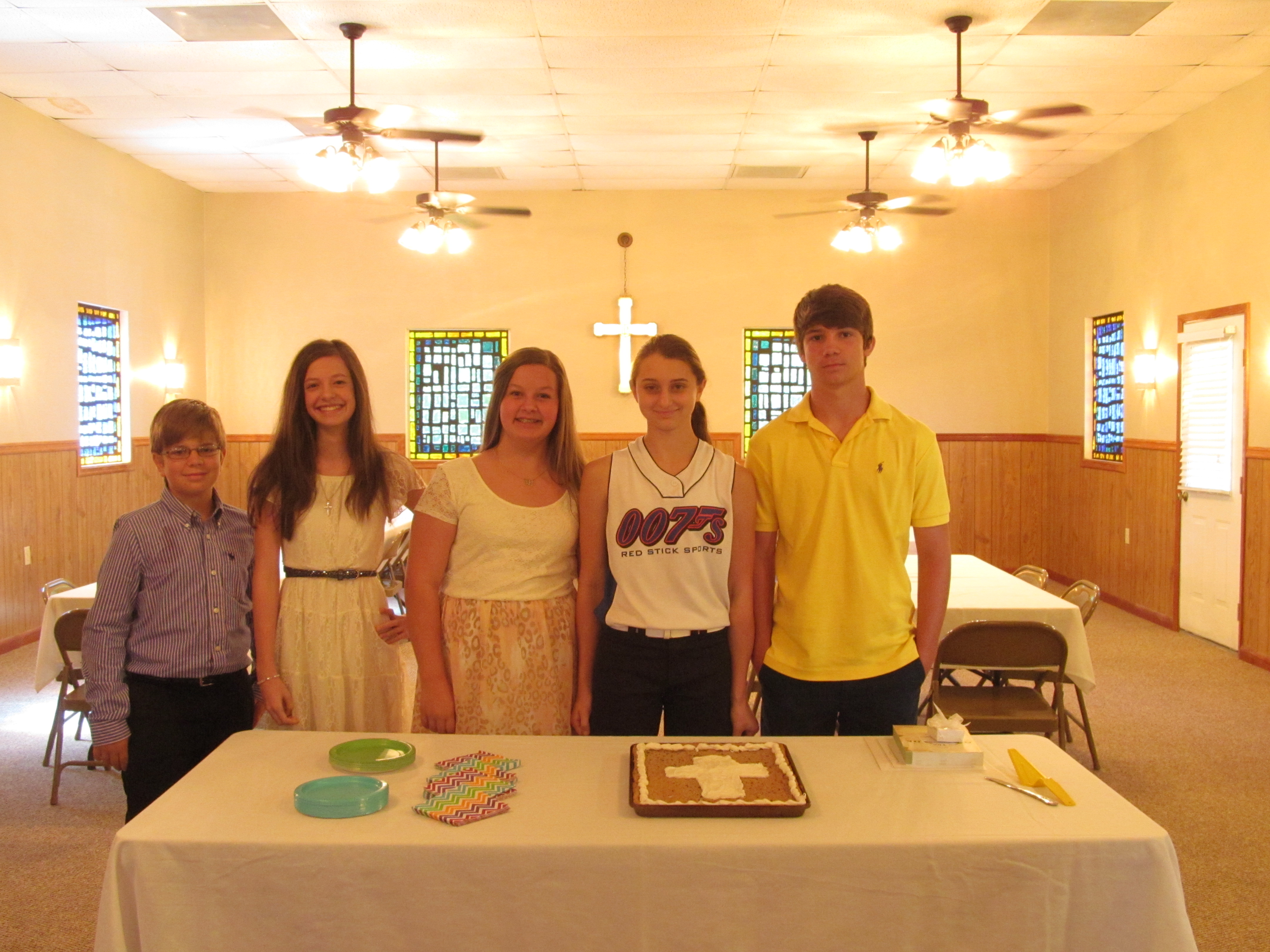
Pine Ridge UMC Confirmation Class of 2014

Pine Ridge UMC Confirmation Class of 2014

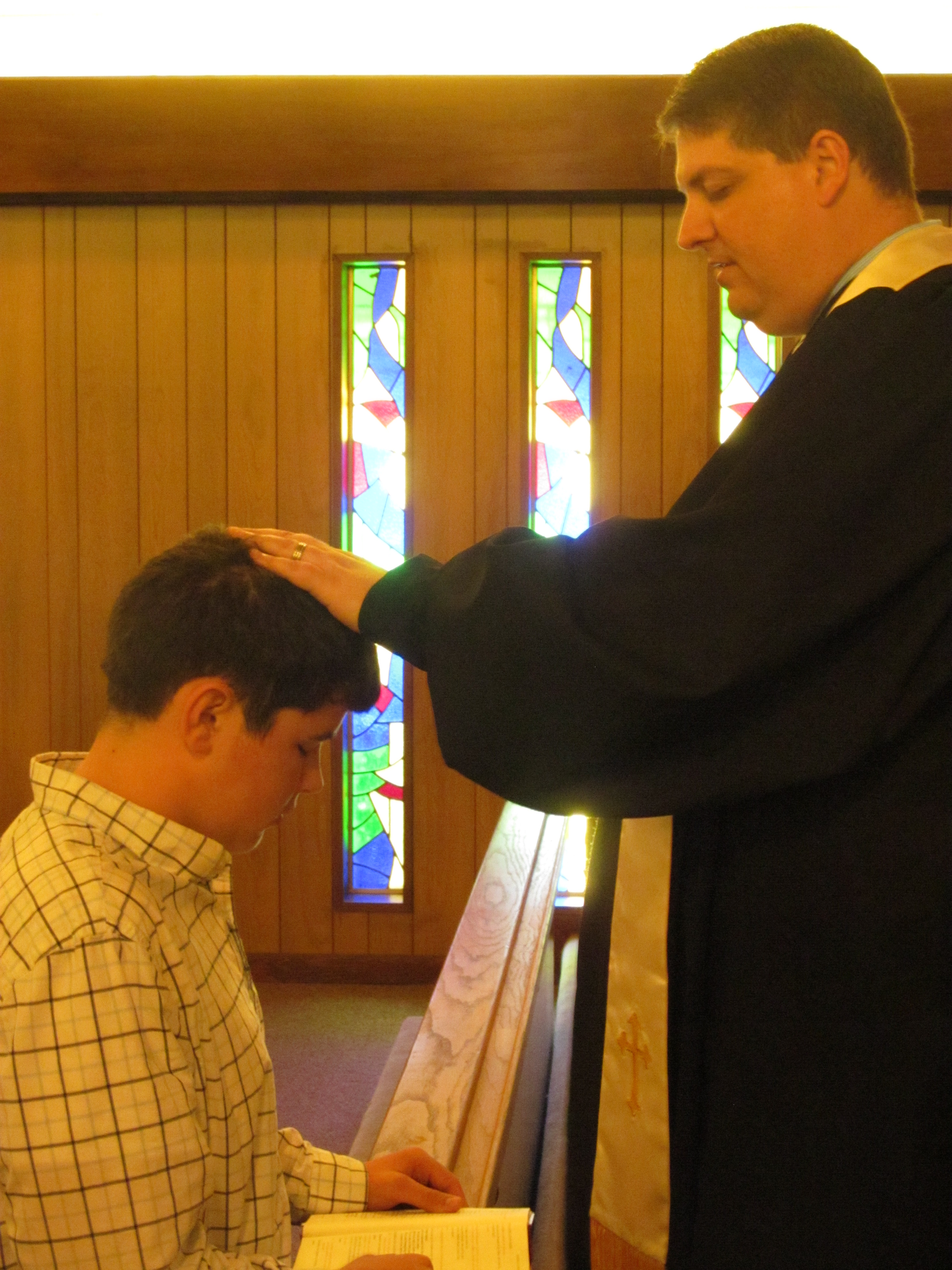
Sunday, May 18 was a great day in the life of the two churches I serve. We had six young people make professions of faith in Christ through baptism and confirmation! That day was the culmination of a two month process called confirmation. Confirmation literally means “with firmness” and it is the culmination of the process began in our baptism as an infant. It is an opportunity for each young person to make their own decision to follow Jesus and to join the church.

Tangipahoa UMC Confirmand

Tangipahoa UMC Confirmand

I met with these young people six times over a two month period on a Sunday night. I really enjoyed getting to know them and sharing with them the story of Jesus and the church. One of the things that we talked about on the very first night was that confirmation was not only a time for them to listen but to ask questions. And they did! They asked me about the differences between Methodists and other churches. They asked me about what happens after death. They asked me about the Bible and how we got it. I tried to answer their questions as best as I could, but there were some questions that I had to honestly answer “I don’t know but this is what I think.” Even while they asked me these hard questions, I was struck by their sincere desire to know more about God and the church. I was struck that they were not afraid to ask the hard questions.

As a pastor, I face many hard questions. Why did my loved one die? Why did I get sick? Why does the one I love no longer love me? Where is God in the midst of my pain? And these are only a few of life’s hard questions that you and I face. I would be lying if I told you that I knew the answers to these hard questions. Truthfully, I have a long list of hard questions to ask God when I get there. My guess is that you have hard questions for God also.

But I love that I serve a God that is big enough to handle our hard questions. That doesn’t mean that we will always understand or that life will always be easy. Psalm 23:4 says that “Even though I walk through the darkest valley, I fear no evil; for you are with me; your rod and your staff— they comfort me.” I wish that it said we would not have to go through the dark valley. But that is not the truth. Even Jesus, God’s own son, had dark days and terrible times. The good news is that even in the darkest valley, God is with us, providing comfort and hope.

I hope that you and I will follow the example of these young people who were hungry to know more about God and the church. I hope and pray that you and I will ask the hard questions. That doesn’t mean that there are easy answers (they are hard questions after all) but it does mean that we follow a God who is big enough to handle our questions, even the hard ones.

Keep Your Big Mouth Shut!

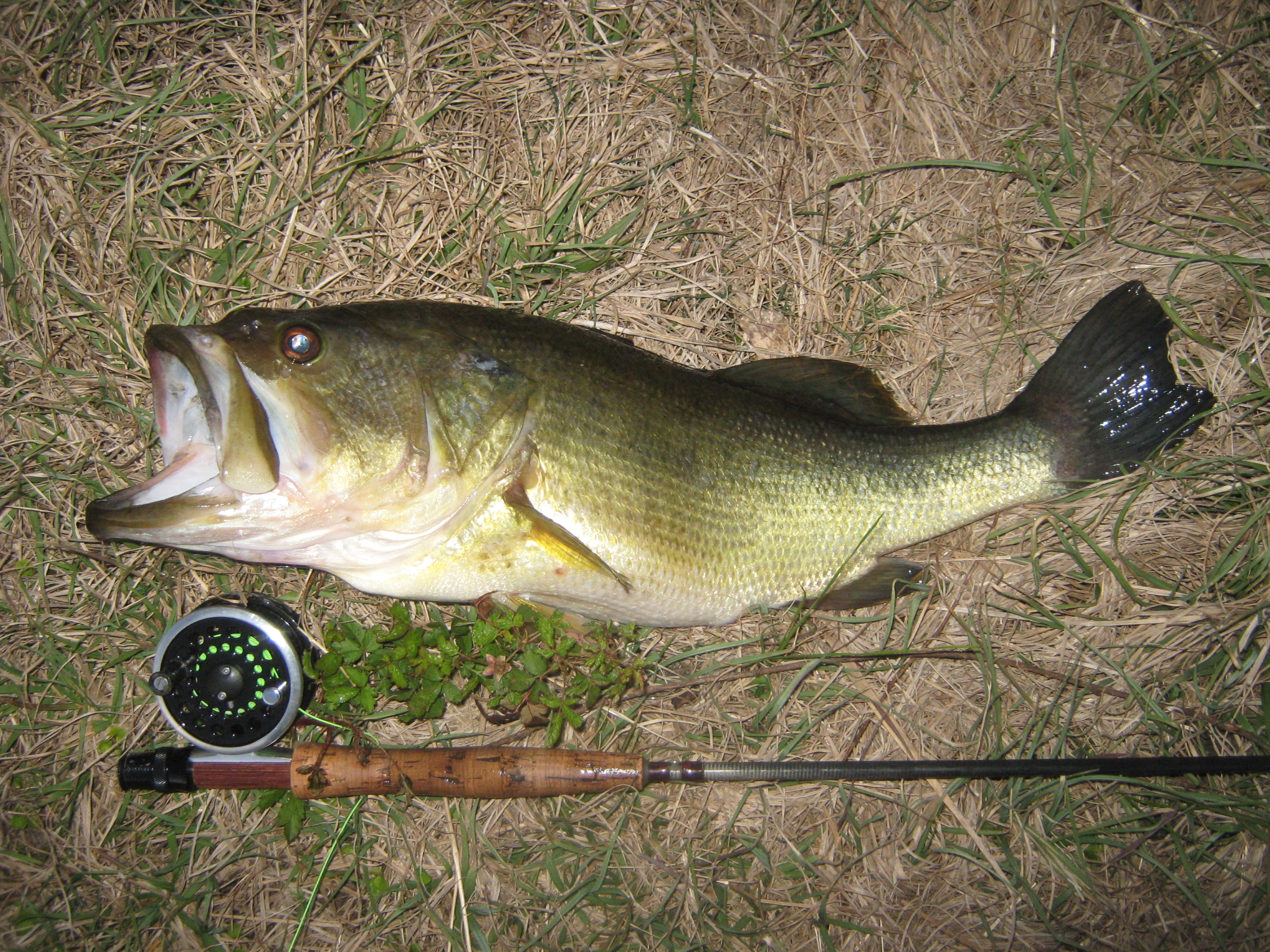
Largemouth Bass with the tail of bream sticking out of it's gullet!

Largemouth Bass with the tail of my bream sticking out of it’s gullet!

As I mentioned here https://revkevreflections.wordpress.com/about/ one of my favorite things to do in my spare time is to go fishing, especially fly fishing. My grandaddy taught me how to fly fish, and every time I go fishing I remember the things he, and my other fishing partners, taught me about fishing and about life. But I think that is a subject for another day.

Black bead chain Wooly Bugger- a favorite fly!

Black bead chain Wooly Bugger- a favorite fly!

Largemouth Bass that ate my bream!  Looks like it needs a good meal!

The Largemouth Bass that ate my bream! It looks like it needs a good meal!

Last spring, I went to a local pond for a few hours of fishing. The wind was calm and I thought it was a beautiful day for flyfishing. So I pulled out my fly rod, rigged it with a wooly bugger (a fly tied with chenile, marabou, and chicken feathers), and proceeded to catch a few bream (pronounced brim- bluegills for non-southerners). I was catching some nice bream and they were putting a nice bend in my long fly rod.

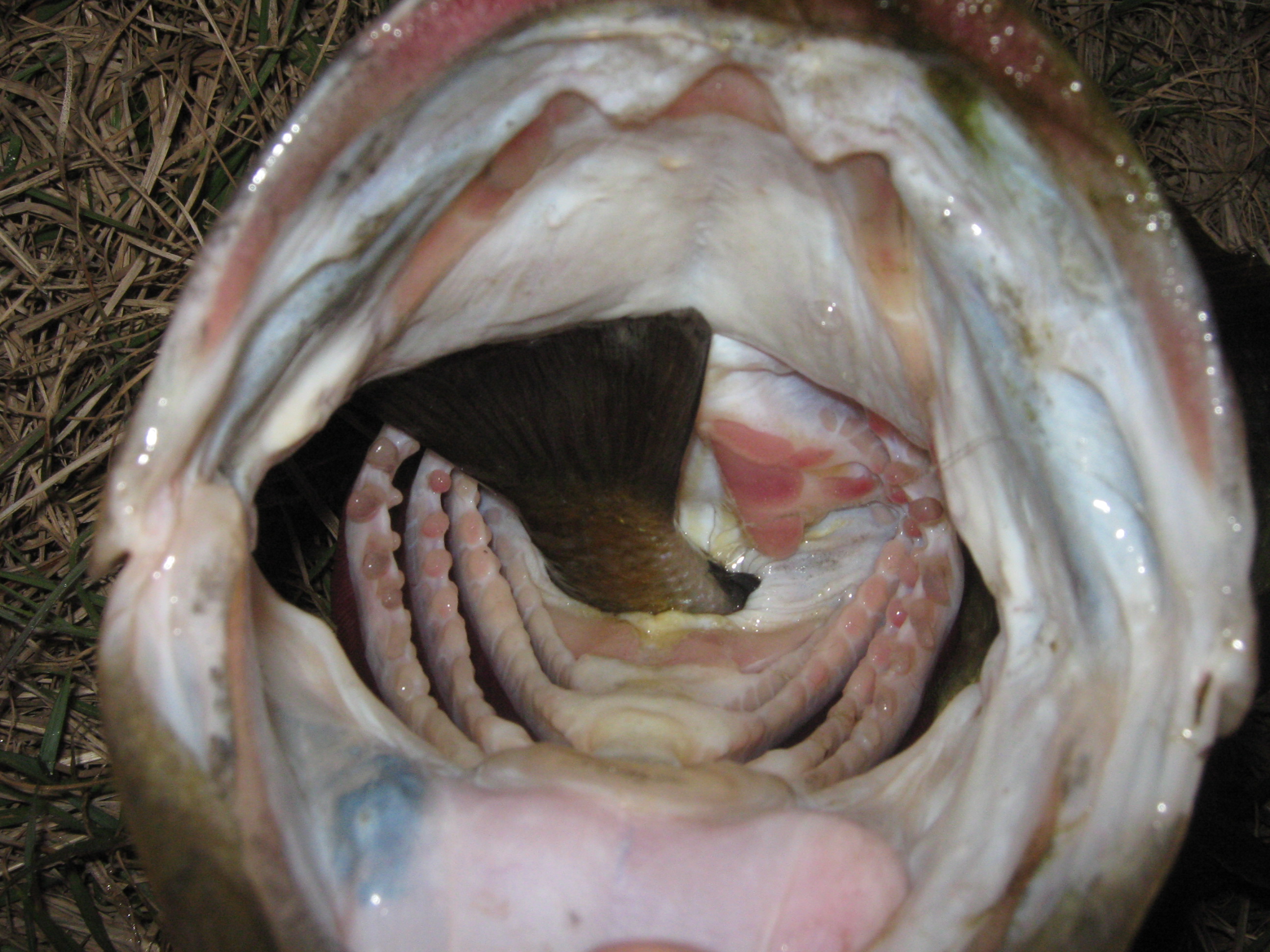
I hooked a nice bream, and it was pulling hard, until the line got HEAVY. He must have got behind a log or a branch, I thought. Then the line start moving away and I realized that either my bream had experienced some exponential growth or I had a large predator fish on my line. Sure enough, after a few runs and allowing the long rod to tire the fish, the fish got close to the bank. It was a big largemouth bass! I landed the fish and when I picked it up by the mouth, I looked into its very large mouth (I could put my entire fist into the mouth of the fish) and all I could see was the tail of my large bream. The bass had decided to try to turn my bream into its next meal and instead its large mouth (pun intended) got it into trouble.

This got me thinking about all the time that my mouth had gotten me into trouble. Sometimes, my mouth outruns my brain and I say things I shouldn’t. I imagine you have been there too.

The book of James in the Bible talks about the trouble our mouth can get us into. It describes the tongue as a raging fire that cannot be quenched (James 3:5-6). James says that though humanity has tamed many species of animals, the tongue has not been tamed (James 3:7-8). It says that though the tongue is small, it can control us if we are not careful, comparing the tongue to a bit that guides a horse or the rudder that controls the direction of a ship (James 3:3-4). In both cases, something small can have a great influence, just like the tongue.

Of course, the tongue can be used for good too. The Bible tells us that a gentle answer turns away wrath (Proverbs 15:1). James even reminds us that “from the same mouth come blessing and cursing. My brothers and sisters, this ought not to be so” (James 3:10)

As I looked at that bass, I couldn’t help but think “if you kept your mouth shut, you could have avoided all this trouble.” But I couldn’t help but think about times that I, like that bass, had opened my mouth and got myself into trouble. The moral of the story, for me, was that I should be very careful about when I open my mouth and how I use it. Maybe I, and that fish, should keep our big mouths shut more often.

By the way, if you’re wondering, I released the bass, with my bream in its gullet, to be caught again. So if you’re in the neighborhood, it is still swimming if you want to try to catch it. Unless it has learned (as I am trying to learn) to keep it’s big mouth shut!

Renovation or Redecoration?

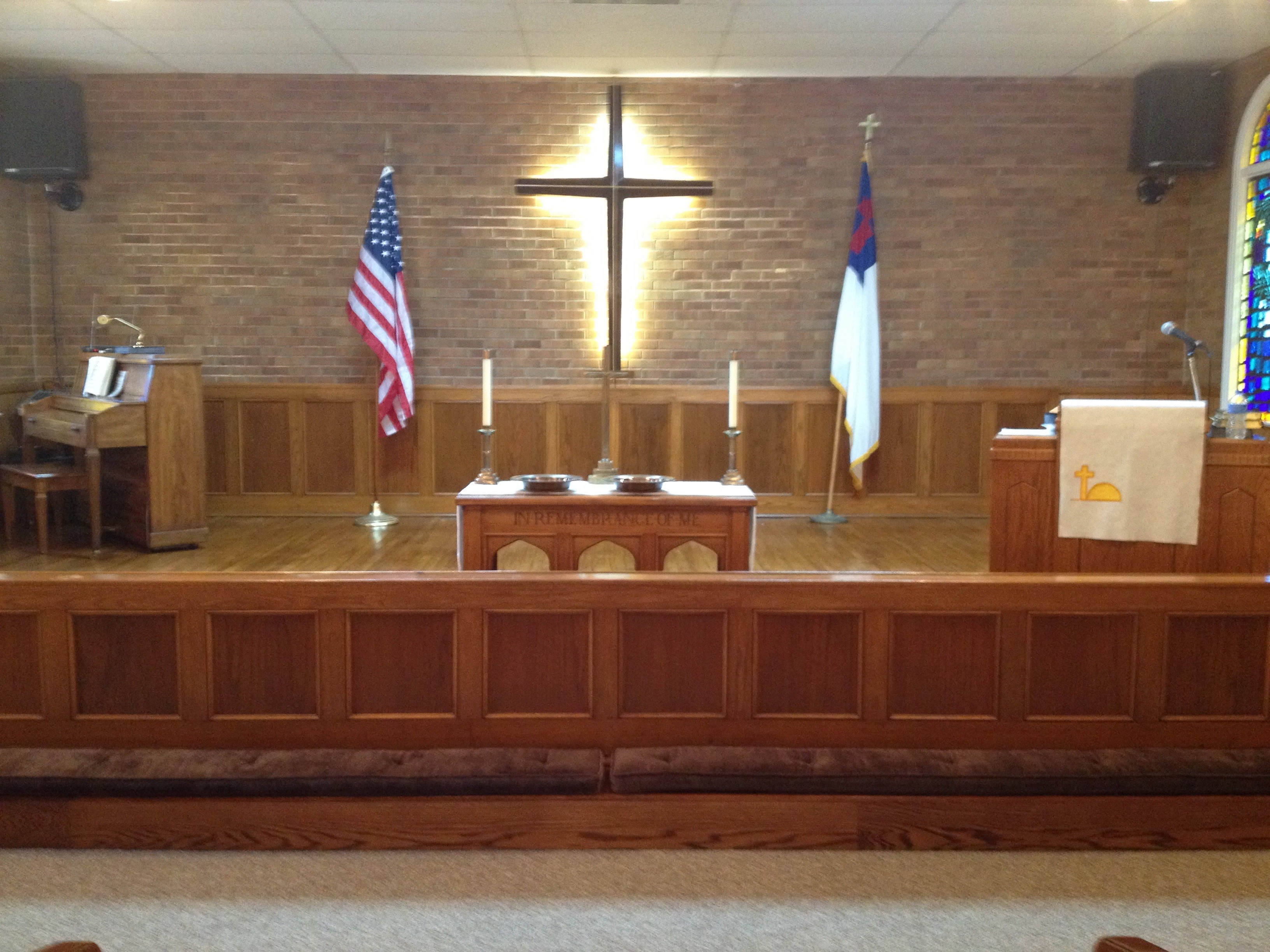
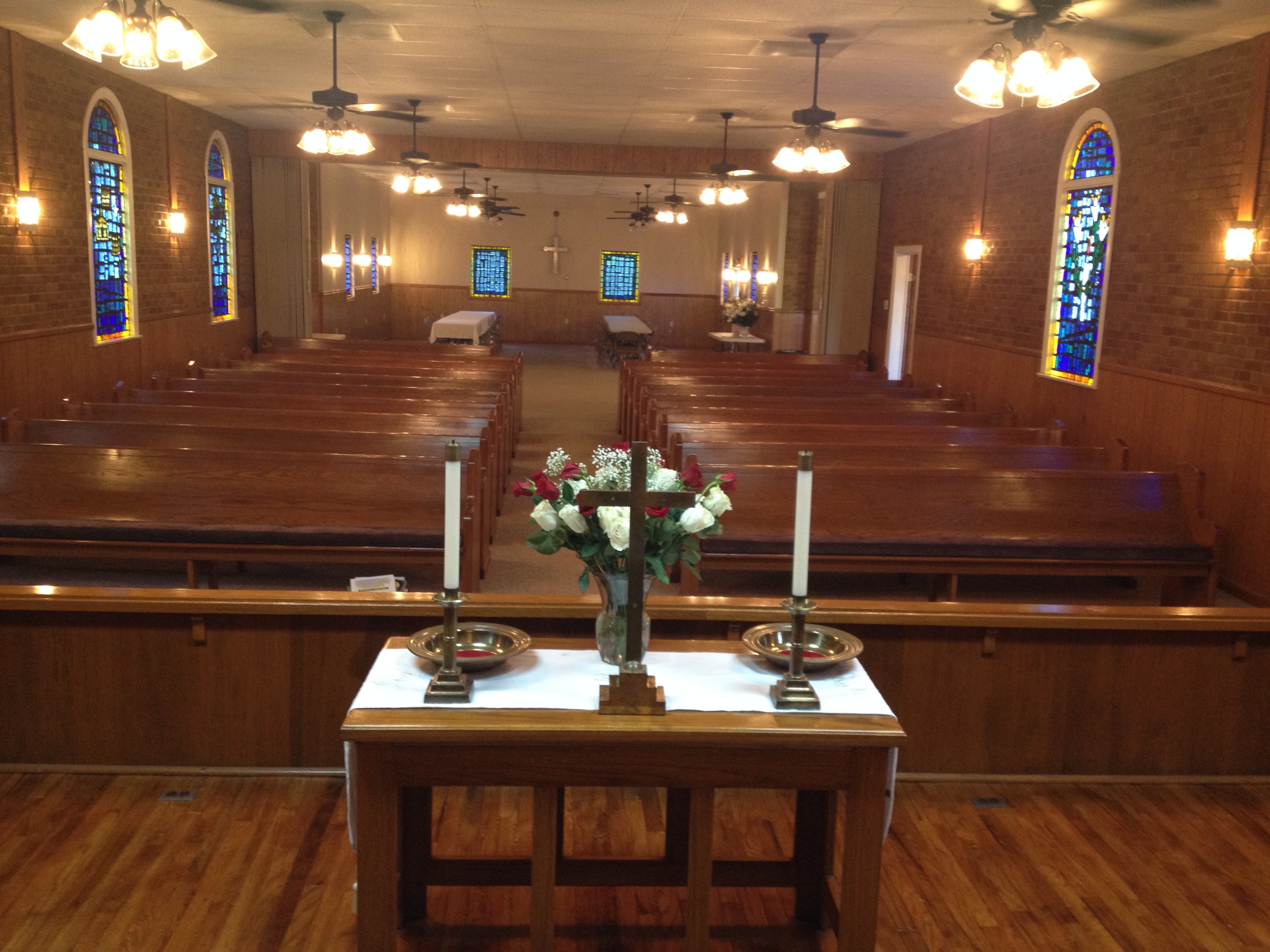
View of the redecorated Pine Ridge UMC from the platform.  New items include: paint, ceiling fans, sconces, carpet, and refinishing wood on the platform.

View of the redecorated Pine Ridge UMC from the platform. New items include: paint, ceiling fans, sconces, carpet, and refinished wood on the platform.

Recently we completed some renovations at the Pine Ridge church. They came out great and we really appreciate everyone, both volunteer and paid, who worked so hard to make our church building a worshipful, beautiful place. It is a true sanctuary and I always look forward to meeting God, and the people of God, in that place where the sunlight streams in through the stained glass windows.

While the changes were taking place, I remarked to someone about the renovations that we were doing. “What changes are you making?” he asked. “Oh, just painting, putting in new carpet, new fans, new lights, new pew cushions and refinishing the wood on the platform. It’s keeping us busy.” “Oh,” he said, “You’re just redecorating. I was afraid there was something wrong structurally with the church.”

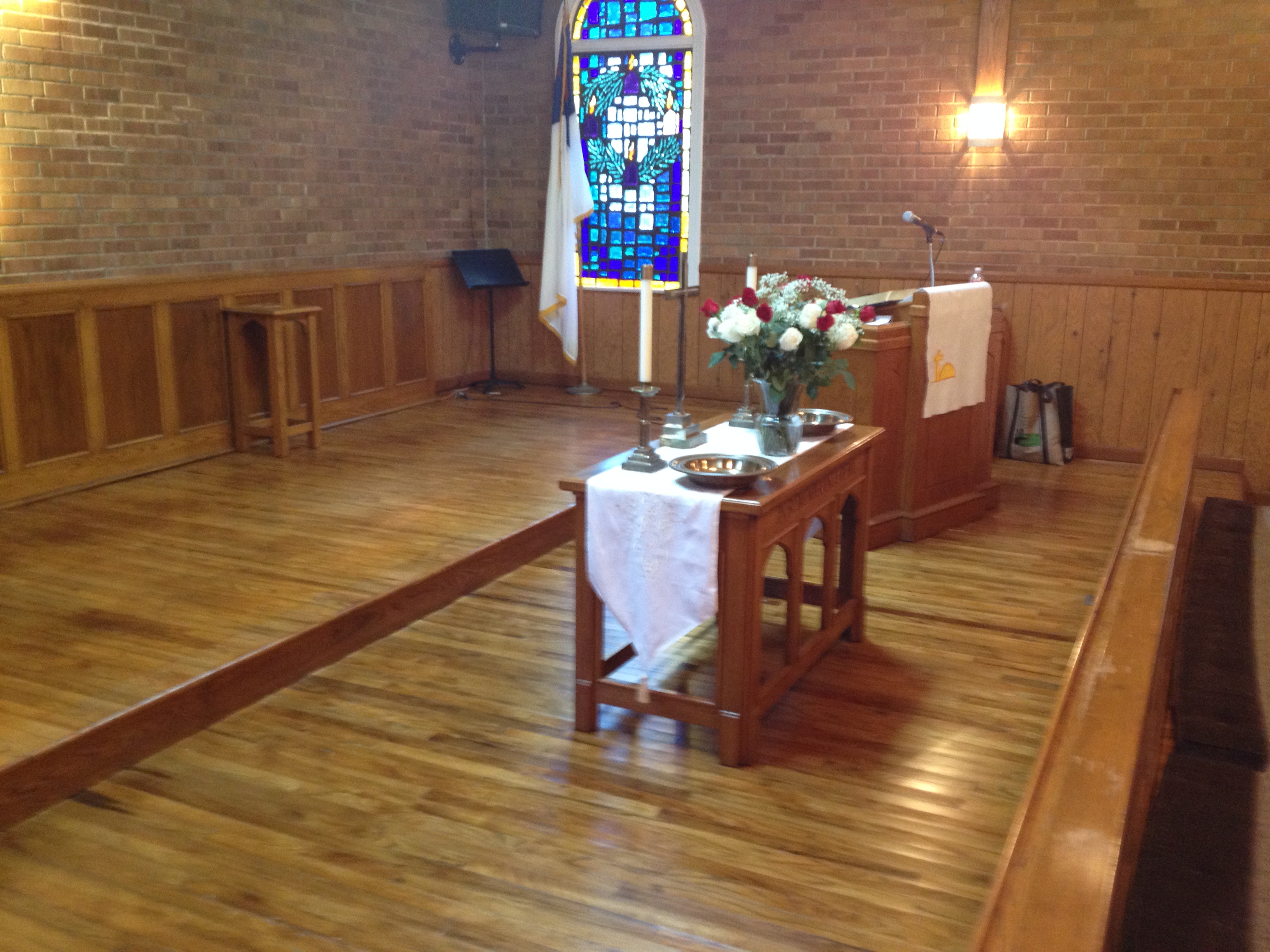
The Pine Ridge UMC platform with newly refinished wood floors.

The Pine Ridge UMC platform with newly refinished wood floors.

His remark got me to considering the difference between redecorating vs. renovating. Now, I am not a general contractor and my construction experience is VERY limited (in fact, I do much better at destruction than construction) but, at least to this friend, there was a vast difference between redecorating and renovating. In his mind, renovation meant making structural changes to a building, while redecorating consisted of changing the furnishings and painting. To him, renovations required much deeper and substantive changes while redecorating was simpler (though definitely not easy) with mostly surface changes.

I couldn’t help but wonder about how this might speak to our lives. Are we redecorating when what we really need are renovations? Do we “paint” a smile on our face even when we are hurting and breaking inside? When some one asks “how are you today?”, do we say “I’m fine” even though we’re not? Do we move the people and furnishings of our life around, when we really need deeper, structural changes? These are tough, deep, and possibly painful questions for us to consider.

So how do we renovate instead of redecorate? For me, it starts with faith in God. Even with the best of intentions, my efforts for self improvement often fail. I say “I’m going to change” or “I’m going to do better” and I may, for a while, but soon I find myself falling back into old habits. In my experience, only God can change the heart and only God can do the kind of deep, structural renovations that we really need to become the people God created us to be.

So the next time you and I paint a smile on our face when we’re hurting inside, or when we tell someone “I’m fine”, even though we’re not, I hope you’ll pause for a moment to ask yourself, and God, if you are redecorating or renovating.

A Church Dog or a Church Cat?

Major, the faithful church dog, join us for Easter Sunrise service April 20, 2014

Major, the faithful church dog, joins us for Easter Sunrise service April 20, 2014

I had not been at Pine Ridge very long before I learned we had a church dog.  He was and is one of our most faithful attendees, showing up at church almost every Sunday whether it was hot, cold, rainy, or sunny, and especially showing up when there was food involved.  He always came with his tail wagging, glad to see anyone and everyone regardless of who they were.  We didn’t know where he came from or whose he was so we just called him “church dog.” We even received a Christmas card from the “church dog’s” owner with a contribution to the church!  It turns out that “church dog” lives across the highway from the church and his “real name” is Major.  “Church dog” could be the ideal church member because he is always there, loves everyone, and even contributes.

A few weeks ago, at the other church I serve, Tangipahoa UMC, a beautiful black and white cat showed up as we were getting ready for worship.  He was very sweet and friendly, and cried at the door during worship because we wouldn’t let him in.  After worship, we picked him up, passed him around, petted him, scratched him, and loved all over him.  We haven’t seen him since.

This got me thinking (always dangerous) about the differences between church dogs and church cats.  Church dogs show up regularly with a good attitude, wagging their tail to welcome others, ready to serve and contribute.  Church cats, on the other hand, show up when they have a need, when they need to be scratched and petted and make a lot of noise about being in church. Like all analogies, this one has its limits, but I couldn’t help wondering which one we are more like- the church dog or the church cat.