Preparation Matters

Blackberry Candy. One of the author’s favorite daylilies.

(Author’s note: This article was originally written for the June Newsletter of the Palestine Methodist Church in Ball, LA where the author serves as pastor.)
I admit it. I have a flower fixation. I suppose as fixations go, flowers are one of the best. I come by it honestly. My grandfather had a large vegetable garden and grew beautiful roses. My mom and dad grew roses and many other flowers and plants. Since moving, I have planted caladiums and impatiens, hung ferns on the front porch, and built beds for my favorite flower, daylilies.

But it was a lot of time and work. First, I killed the grass and weeds. Then, I cleared the space of competing plants. Tilled the soil. Next, I raked out the grass, weeds, roots, and other impediments to growth. Added improvements (cow manure) to the soil. Placed edging to protect the plants and keep weeds and grass out. Finally, the soil is ready to plant. Now, all I need is time, water, sunshine, and a bit of fertilizer.

Preparation matters. Without proper preparation, the plants stand little chance to grow. With proper preparation, I hope they will thrive. In the secular world, the saying goes “to fail to plan is to plan to fail.” If you were a scout, you know the Scout motto “Be Prepared.” As I was working on my flower beds, I thought, what would happen if I put this much preparation into my spiritual life? Do I put as much preparation into my spiritual life as I put into flowers and plants? As much preparation as I put into my job and career? As much preparation as I put into my fishing trip or hunting trip or other types of recreation?

How can we be spiritually prepared? Do we spend time in God’s Word regularly, perhaps with the help of a devotional book such as the Upper Room, Our Daily Bread, or a number of online devotionals? Do we pray regularly? Do we attend worship on Sunday? Are we a part of a small group such as a Sunday School class? All of these things and more can help us be spiritually prepared for God to grow and move in our lives.

As David prepared to face Goliath the giant, he told King Saul “Your servant has killed both the lion and the bear; this uncircumcised Philistine will be like one of them, because he has defied the armies of the living God.” 1 Samuel 17:36. Did you hear that? David was prepared to face the giant because God had already helped him defeat the lion and the bear. What challenges have you overcome? What lion and bear have you defeated? Perhaps God is preparing you to face a giant.

Preparation matters in the garden, in life, and in our spiritual lives. If we aren’t doing the preparation, then we cannot expect the fruit or the flowers. But when we prepare, we open the door for God to bless us and to help us defeat whatever giants we face.


Preparing for Growth,
Kevin D. Smith
For the Beauty of the Earth

(Author’s note: This article was written for the May 2018 Newsletter “The Cross and Tower” for First United Methodist Church Winnfield)

IMG_2117

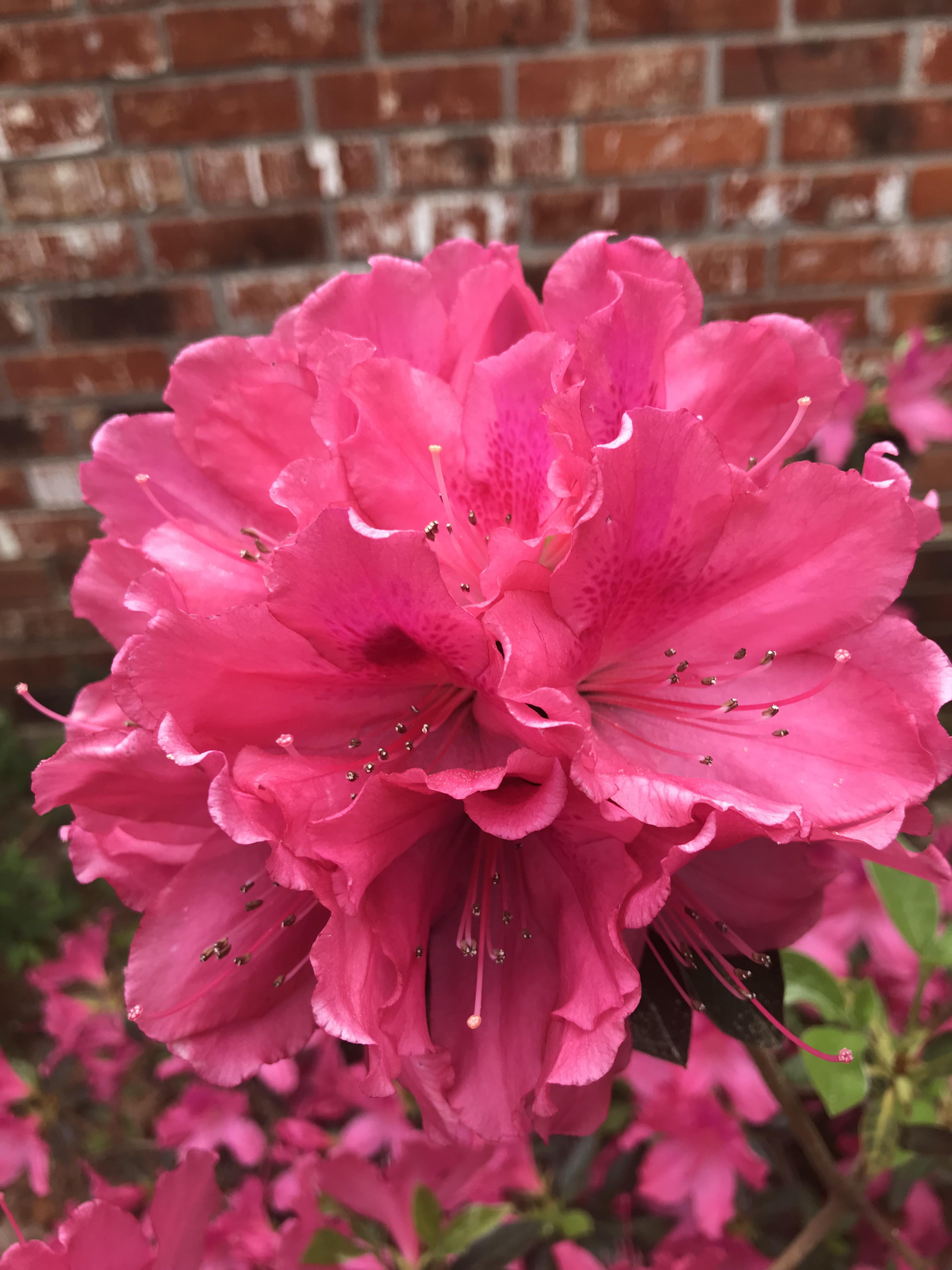
Azalea cluster closeup from the author’s yard March 27, 2018

If you are a musician or even a fan of music, you probably recognize the title of this article. It is from a hymn by the same name, number 92 in the United Methodist Hymnal. The first stanza reads “For the beauty of the earth, for the glory of the skies, for the love which from our birth over and around us lies. Lord of all, to thee we raise this, our hymn of grateful praise.” Each stanza of the hymn paints a picture of gratitude embodied in some aspect of God’s creation: the earth (stanzas 1 and 2), the senses (stanza 3), “human love” (stanza 4), the church (stanza 5), and the gift of God as manifest in Christ (stanza 6). (source: For the Beauty of the Earth History)  The writer of the hymn was Folliot S. Piermont in 1864 and the music by Conrad Kocher in 1838.

IMG_2173

White Bearded Iris from the author’s yard on April 15, 2018 

Indeed, it has been a beautiful spring. My neighbor, Mrs. Price, has some azaleas in the front of her yard that bloomed so profusely that the plants seemed ablaze with red flowers for several weeks. In my own yard, my bearded irises bloomed for the first time in several years, my azaleas bloomed beautifully, my roses are just now having their first flush of blooms, and I have flower scapes on my daylilies. The days have been markedly cooler, albeit too cool for some, (especially those in the Northern US who have received FEET of snow in April). But I’m trying to enjoy these cool days because I know that all too soon August will be here and it will be hot again. Even many of the sunsets and sunrises have been beautiful this winter and into the spring.

Sunday, April 22, 2018 was Earth Day. But God was showing His beauty through the earth, long before there was an earth day. Consider these scriptures. “The heavens declare the glory of God, and the sky above proclaims his handiwork.” Psalm 19:1. “He has made everything beautiful in its time. Also, he has put eternity into man’s heart, yet so that he cannot find out what God has done from the beginning to the end.” Eccleasiastes 3:11 “When I look at your heavens, the work of your fingers, the moon and the stars, which you have set in place, what is man that you are mindful of him, and the son of man that you care for him?” Psalm 8:3-4. “And God saw everything that he had made, and behold, it was very good.” Genesis 1:31.

These are only a few of the scriptures that speak of the beauty of God’s creation. The next

IMG_2158

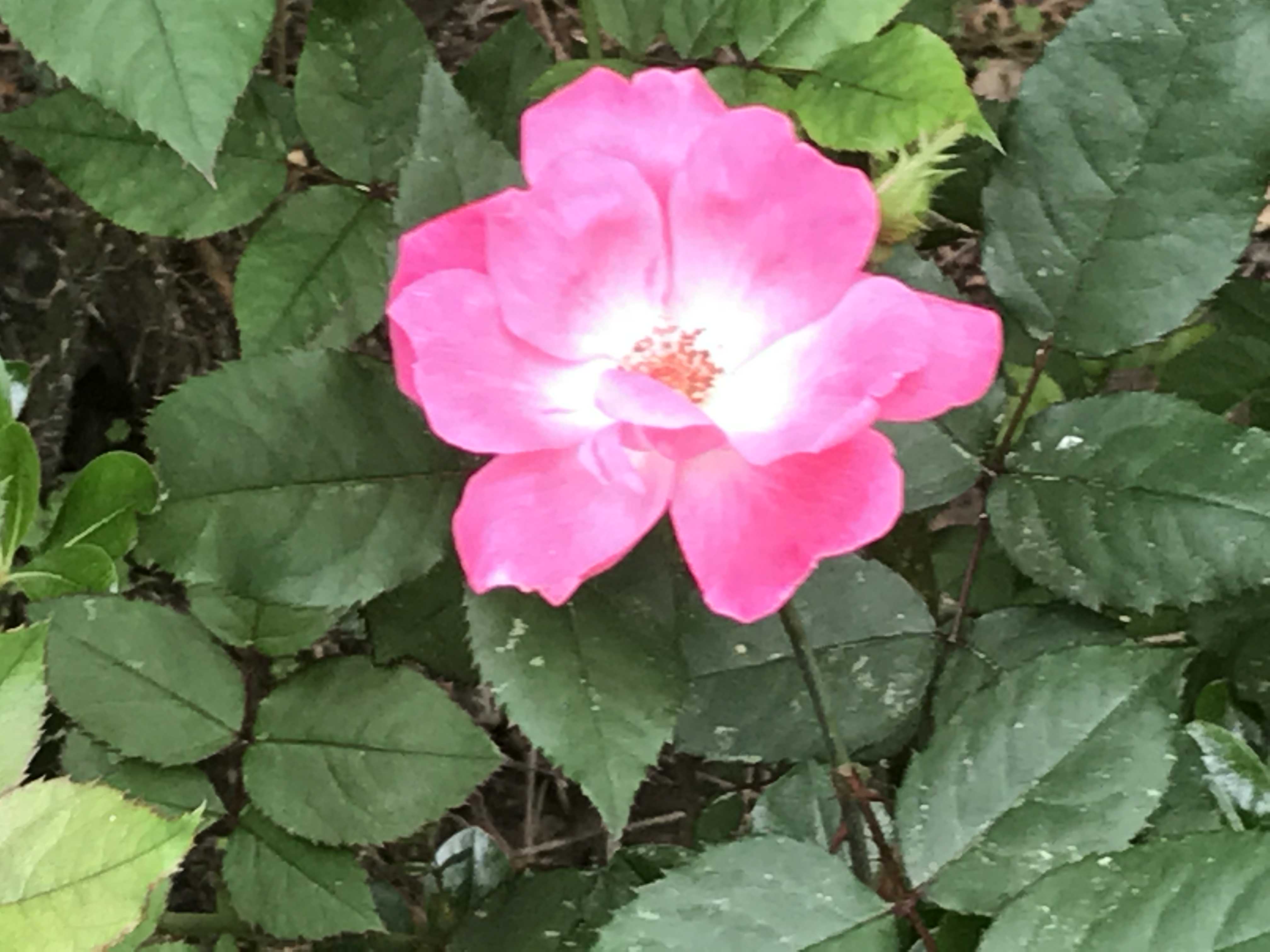
Rose from the author’s yard April 6, 2018.

time you see a flower, or a sunset, or a flying bird, or the beautiful stars, or maybe hear a beautiful hymn, take a moment to enjoy and say thank you for the beautiful earth that God has graciously given to us. Even as we enjoy God’s creation, we know it is also our responsibility to protect the earth and pass all of these beautiful things on to those who come after us. Notice and enjoy the beauty of God’s creation, but protect it so that others can experience “the beauty of the earth” and experience God in the same way.
Noticing God all around me,

Kevin Smith

New Every Morning

daylily collage

A few pictures of the author’s daylilies from the yard.

Gardening has been a part of my family’s life for as long as I can remember. Some of my best memories took place in a garden, picking carrots, blueberries, blackberries, pears, and many other fruits and vegetables. We also spent many hours fertilizing, spraying, and caring for flowers like roses, calla lilies, and many other varieties.

Gardening not only connects me to my family, but also to my faith. The creation story in Genesis takes place in a garden (Genesis 2-3). The night before he was crucified, Jesus prayed in an olive garden, the garden of Gethsemane (Matthew 26:36-46). Following his crucifixion, Jesus is placed in a tomb in a garden (John 19:38-42). After his resurrection, Mary Magdalene mistakes Jesus for a gardener (John 20:11-18). In Jerusalem, I visited the Garden Tomb, which could be the place where Jesus was placed, and where people from all over the world gather to worship. In death, many caskets and funerals, are graced with stands, sprays, and wreaths of flowers or live plants as a symbol of life even in the midst of death.

I have several plants in my garden. Roses, bearded irises, Louisiana irises, lantana, gladiolus, and annuals such as zinnias and salvinia to attract butterflies and hummingbirds. But my favorite is the daylily. I like dayliles for several reasons. First, they are tough. My daylilies have survived several moves, transplants, and other challenges that would kill many flowers. Often, they have bloomed in the boxes or bags in which I moved them! They grow almost anywhere, in almost any soil, though they do best with lots of sun. Second, there are many varieties and variations. If you don’t believe God likes variety, look at the daylily! Daylilies can be found in almost all shades of the rainbow (except blue). Some are small (as small as 2 inches), others are large (as big as 10 inches), while most fall somewhere in between. Daylilies have many forms.  Some have eyes or colored edges, others have rounded forms or long, spindly arms (usually called spiders). Daylilies have many varieties and variations.

My favorite thing about daylilies is that they are new each day. The scientific name (hemorocallis) literally means “beauty for a day.” And that is what they do. Bloom for one day. Only. Then they die. When I walk through my garden, one cultivar that was a beautiful flower yesterday is now a dull, lifeless husk. Conversely, one bud that yesterday was only the promise of a bloom has blossomed into a beautiful flower. Here today, gone tomorrow. Just like life. Just like us. The daylily reminds me of what lasts, and what does not. “The grass withers and the flowers fall, but the word of our God endures forever” Isaiah 40:8. I am reminded, that like the lilies are new every morning, so is God’s mercy. “22 Because of the Lord’s great love we are not consumed, for his compassions never fail. 23 They are new every morning; great is your faithfulness.” Lamentations 3:22-23

The next time you see a beautiful daylily, beautiful for only a day, think about what lasts and what passes away. Maybe, like me, you will find a blessing that is new every morning.